
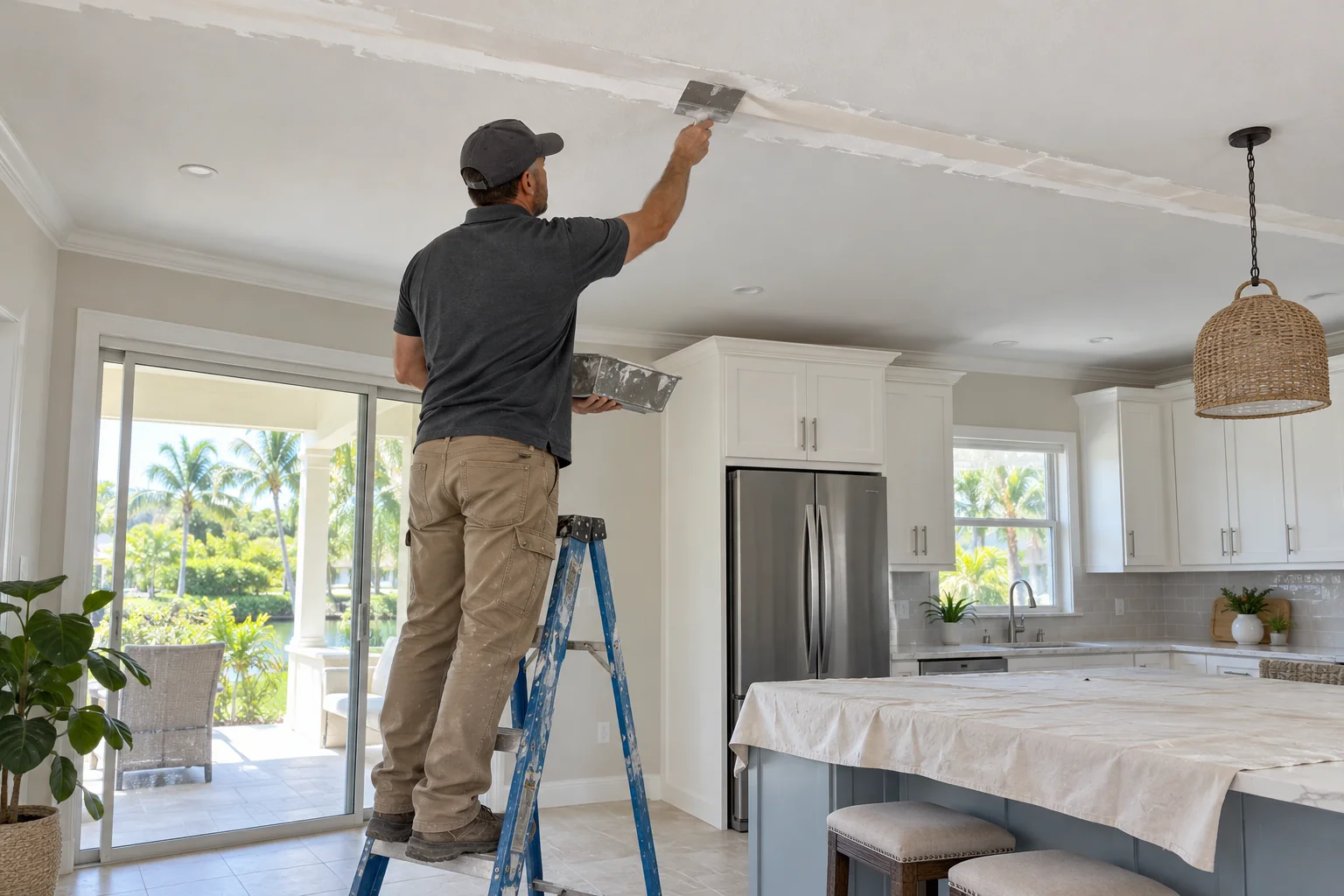
Understanding cracks and lifted seams
A ceiling crack may follow a board joint or cross an older patch. Loose tape can create a ridge, a narrow shadow, or a strip that begins to peel. We look at the materials around the damage and whether the area has been repaired before. Adding compound without preparing unstable material may leave the same issue underneath.
Tell us if the crack has changed, returned, or appeared after other work. A finishing repair addresses the visible surface and its immediate support. When signs suggest a separate movement problem, that needs to be considered before choosing a cosmetic repair.
Sagging areas need closer attention
A sagging section can involve damaged board, loose attachment, water exposure, or another condition above the ceiling. We do not assume it is only a texture issue. The condition of the drywall and what supports it determine whether the area can be repaired locally or needs replacement.
Keep people and belongings away from a visibly unstable section, and avoid pressing or poking it. Send photos from a safe position. If water is involved, the source and any necessary drying or assessment work need to be addressed before the ceiling is closed and finished.
Before & after

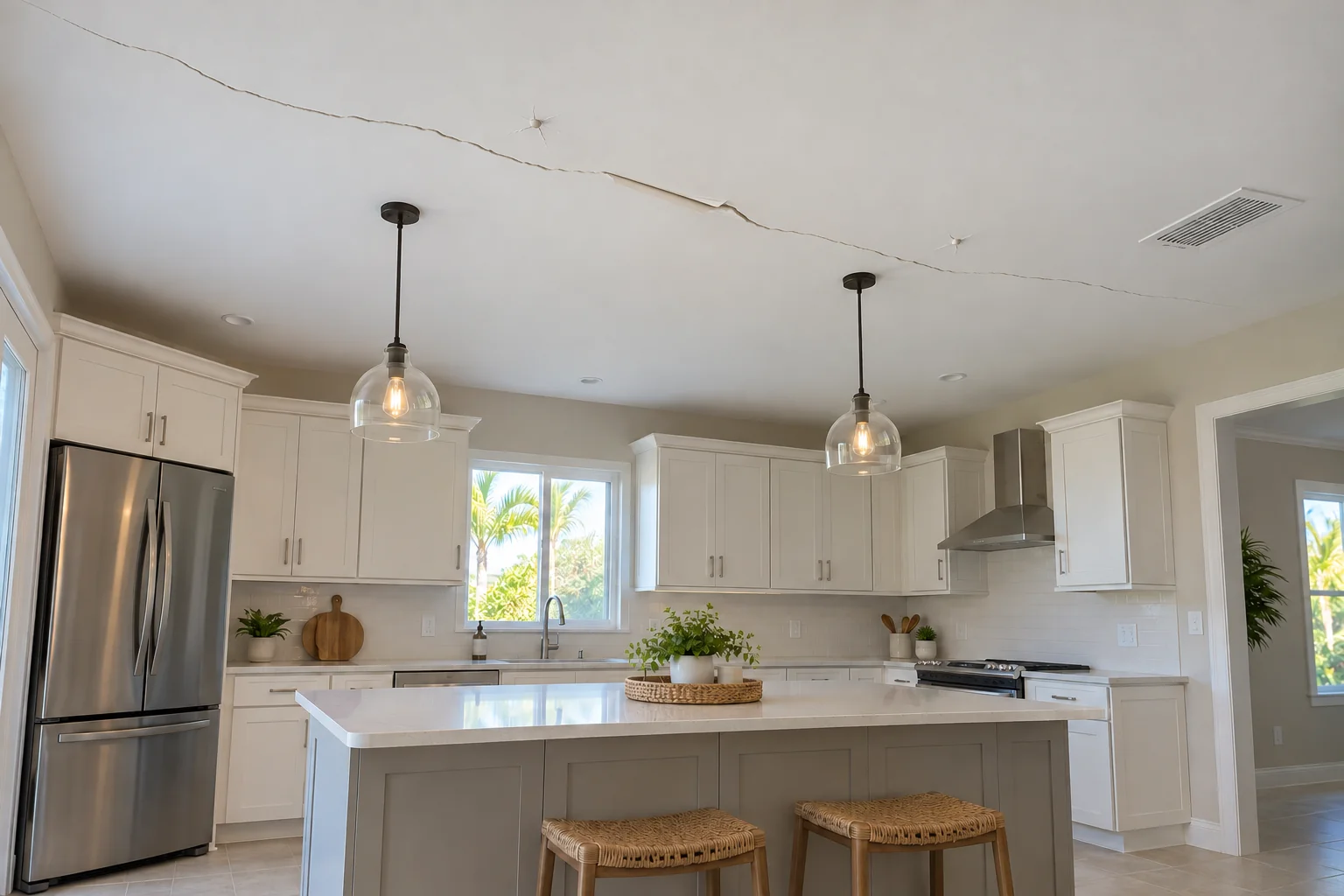 BeforeAfter
Water stains and damaged finishes
A brown ring or bubbling paint can remain after a leak has stopped. The stain alone does not establish whether the drywall behind it is sound. We ask about the source, when it happened, and whether the area has been checked since the leak was repaired.
The scope may involve finish preparation, a replacement section, or a broader area of repair. Texture, primer, and paint are separate considerations. A local paint touch-up can stand out on an older ceiling, so we discuss whether a larger paint area would provide a more consistent appearance.
Patching after electrical or plumbing work
Ceiling openings are often part of installing lights, tracing plumbing, or accessing equipment. Before we close them, the other trade should be finished with that access. Tell us if an inspection, test, or return visit is still expected. It is easier to plan the sequence than to reopen a fresh repair.
We assess the opening, nearby edges, and support for the new section. Several small openings may share one finishing area, while separated holes may need individual preparation. Include a photo showing all the openings in the room so the quote reflects the full job.
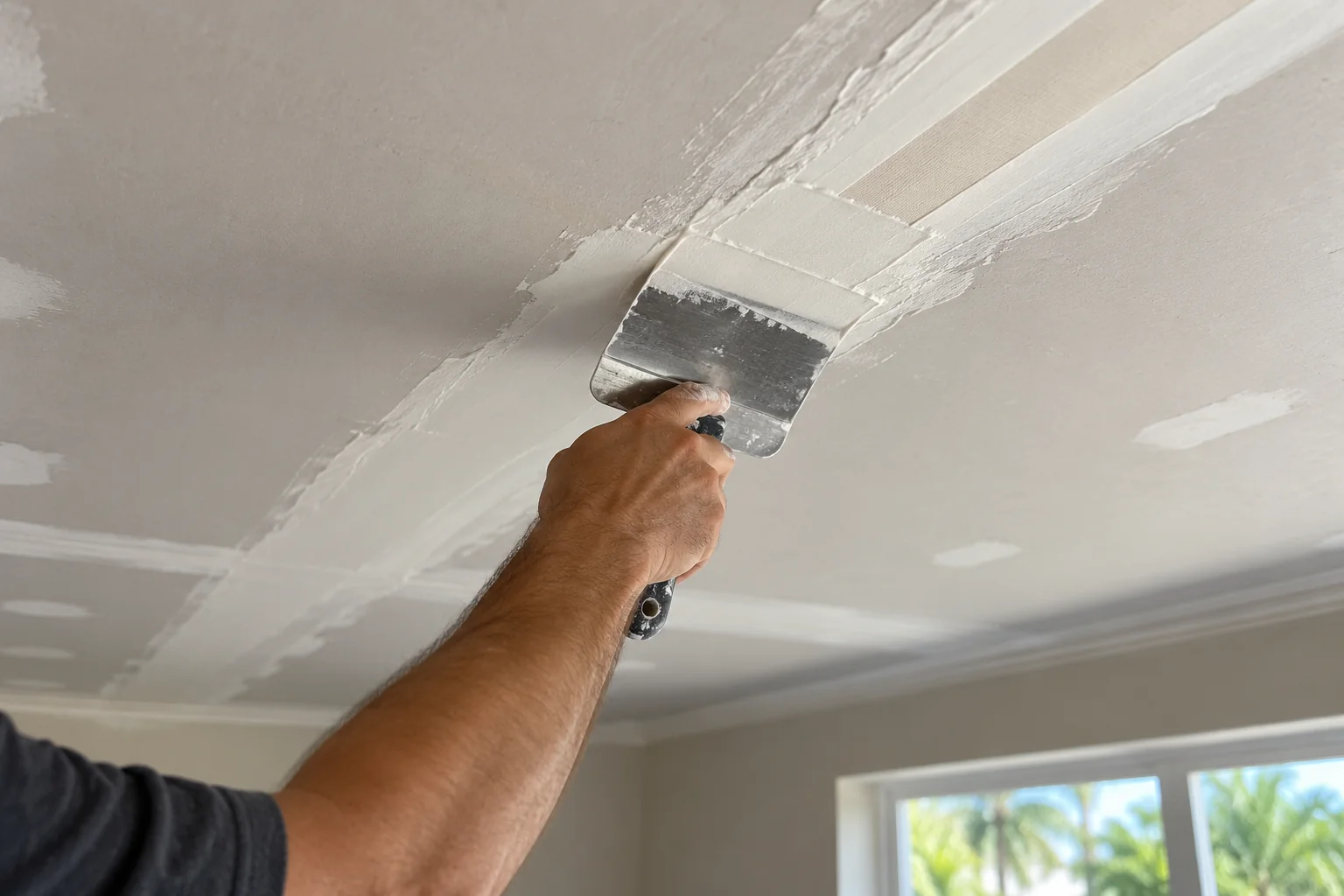
Matching the ceiling around the patch
Knockdown, orange peel, popcorn, and smooth ceilings all behave differently during a repair. Pattern size, paint buildup, and the direction of the light affect how a patch blends. A wider finishing area may help soften the transition between new work and the existing surface.
If you are considering changing the entire ceiling finish, tell us before a local repair is priced. Repairing one section and refinishing a whole room are different scopes. We can discuss whether the planned work is a repair, texture matching, popcorn removal, or a combination.
Access and room preparation
Ceiling height and room layout affect the equipment and working space required. Stairwells, vaulted areas, ceiling fans, pendant lights, and large furniture all matter. We agree on what should be moved and how the work area will be protected before the job starts.
Some repairs need more than one stage because compound, texture, and coatings need time between applications. The sequence depends on materials and conditions. Text us a photo, get a quote, and we will reply with the information needed to plan the work and the finish.
Ceiling crack repair
Ceiling cracks often follow the drywall seams, run out from a light fixture or appear where the ceiling meets the wall. Many come from tape that has lost its bond over time, especially in older homes and in rooms with long spans. We cut out loose tape, re-tape the joint, and blend the repair into the knockdown, orange peel or smooth finish around it. A ceiling crack paired with sagging or a fresh stain is a different problem, and we look for the cause before we cover it.
Sagging ceiling repair
A ceiling that dips between the framing can mean the drywall has pulled loose from its fasteners, absorbed water, or was hung without enough support. Re-fastening can fix a small loose area. Drywall that is bowed from moisture is replaced, since it will not flatten back out. If a section of ceiling is sagging noticeably, keep people and furniture out from under it and send us a photo.
Your questions, answered.
Can you fix a crack without refinishing the whole ceiling?
A localized repair may be appropriate when the surrounding area is sound. The size, texture, lighting, and cause of the crack determine how far the finishing and painting scope should extend.
What if my ceiling is very high?
Include the approximate height and a wide photo of the room. Vaults, stair openings, and furniture affect access. We assess those details before choosing equipment and confirming the scope.
Will you remove my ceiling fan?
Fixture removal and reinstallation need to be agreed on before work begins. Tell us what is in the repair area so the right trade and timing can be arranged where needed.
Can a stained ceiling simply be painted?
Only after the source and condition of the area have been addressed. Damaged drywall or a failing finish needs repair first. The coating plan should account for the stain and the surrounding ceiling.
Do I need an empty room?
Not every job requires the same preparation. Access, furniture size, and the amount of ceiling work determine what needs moving. We discuss room preparation when the scope is confirmed.
Why does my ceiling crack along a straight line?
A straight crack usually follows a drywall seam where the tape has lost its bond. Re-taping the joint is the lasting fix, followed by texture and paint to blend it in.