
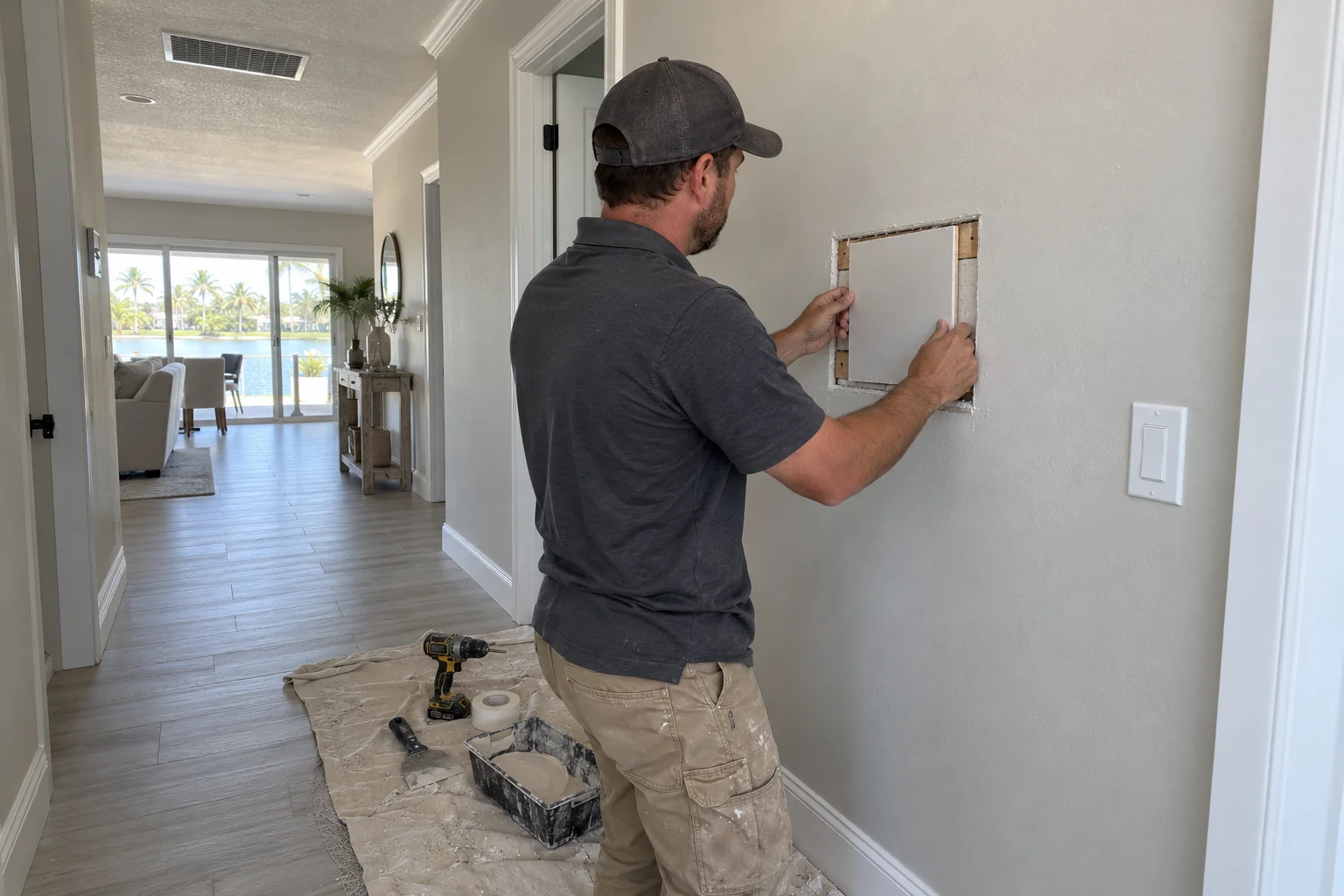
Holes, dents, and damaged wall sections
Furniture moves, door handles, and everyday knocks can leave broken drywall paper and loose gypsum behind. Filling over those edges can leave a weak repair. We assess what is still sound, prepare the opening, and choose a patch method suited to its size and position. A larger opening may need a replacement piece with support behind it.
The repair area usually extends beyond the visible hole. Tape and compound need room to blend into the surrounding surface. That is why a small hole can require a wider finishing area, especially on a smooth wall beside a window.
Cracks, nail pops, and loose tape
A crack can follow a sheet joint, appear at a corner, or return where a previous patch did not address the underlying condition. We look for loose material and movement before deciding how to prepare it. Nail pops and raised screw locations also need attention beneath the finish, rather than another coat of paint over the bump.
Lifted tape and failing seams may need loose sections removed and the joint rebuilt. If a crack is widening, recurring, or accompanied by other changes in the home, tell us before work begins. A cosmetic repair cannot resolve every cause of movement.
Before & after
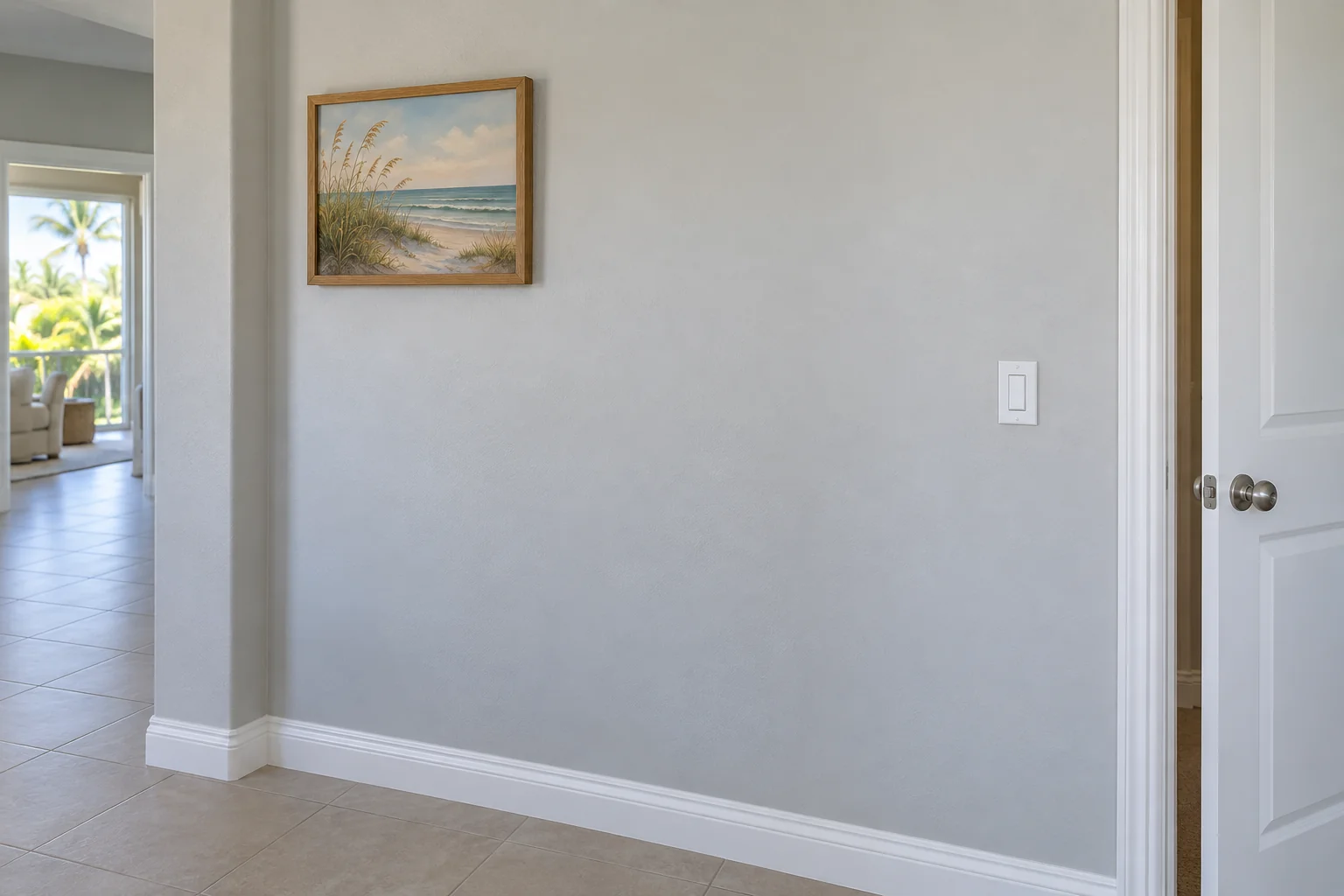
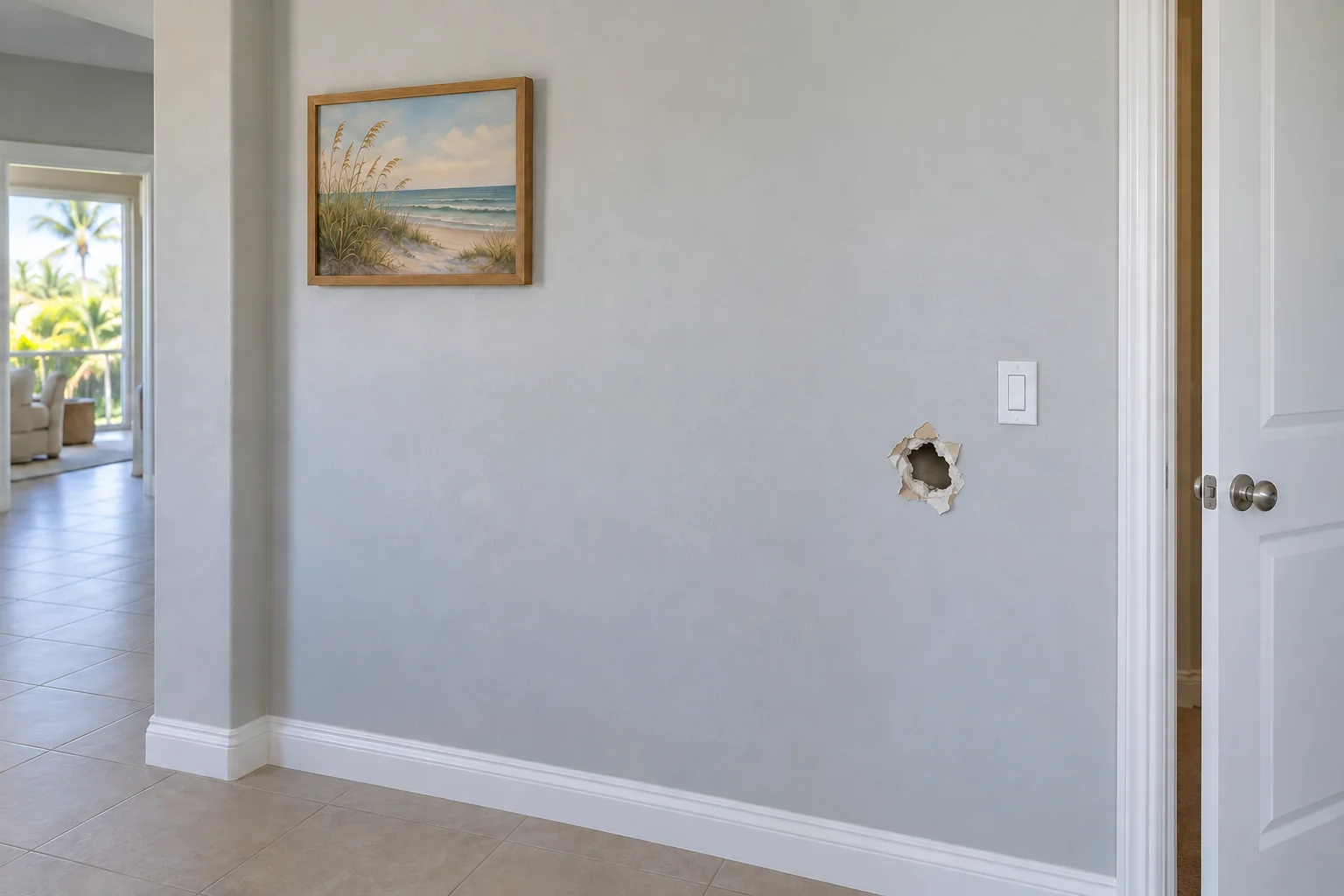 BeforeAfter
Straightening damaged corners
Outside corners take a lot of contact from furniture and foot traffic. A dented corner bead can leave a chipped edge, a bulge, or a crack running down the wall. We inspect how firmly the bead is attached and whether the damage is local or extends farther along the corner.
The finish should follow the existing wall lines. Repairing a corner can involve work on both adjacent faces, which matters when planning texture and paint. Include a side view of the corner in your photos so its shape is easier to assess.
Working with older plaster walls
Some older homes have plaster rather than standard drywall. Plaster can be harder, thicker, and supported differently. We identify the surface before choosing materials and preparation. A shallow chip is different from a loose section that has separated from what supports it.
Tell us if you know the wall's age or have records from earlier repairs. Photos of the broken edge can help distinguish the materials. Where surrounding plaster is unstable or the repair needs another specialist, the scope should account for that before finishing begins.
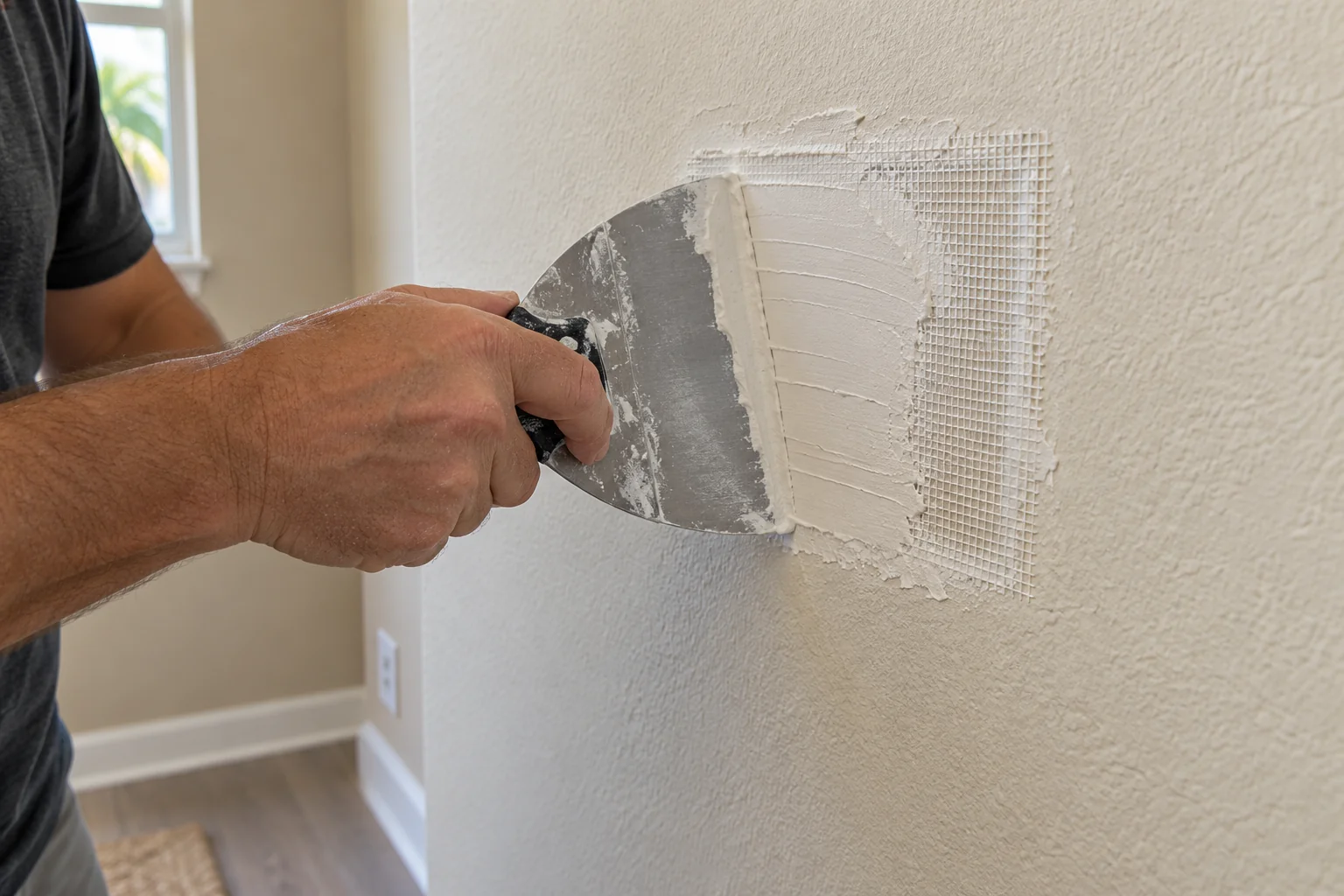
Texture, primer, and paint planning
After the patch is built, the surrounding finish determines how it should be blended. Orange peel, knockdown, and smooth walls each call for a different approach. Existing paint buildup, directional sunlight, and sheen can affect how noticeable the completed area looks.
We discuss where the drywall work stops and what painting is included in the quote. A matching paint label is useful, but older paint can change in appearance. Painting a broader wall section may create a more consistent result than touching up only the patch.
Make the repair easier to assess
Start with one close photo and one photo showing the entire wall. Add a rough measurement, your city, and a note about what happened. Mention nearby outlets, switches, built-ins, or anything that limits access. If a wall has been wet, say whether the source has been repaired and when the area last felt damp.
Text us a photo, get a quote. We review the information and reply with next steps. Some repairs can be scoped from photos; others need a closer look before the work and finish can be priced.
Drywall crack repair
Drywall cracks tend to show up at the corners of doors and windows, along ceiling seams and where two walls meet. A hairline crack in paint is often a surface issue, while a crack that reopens after a patch usually points to loose tape or movement in the framing. We open the crack, secure or replace the tape, and rebuild the surface in thin coats so the joint does not ridge. If a crack keeps growing or appears with sticking doors, tell us. Some movement needs another professional's look before a cosmetic repair makes sense.
Drywall patch sizes, from nail holes to full sections
Small anchor and nail holes are filled and sanded. Doorknob holes and fist-size damage usually get a mesh or backed patch. Larger damage, such as a section cut out for a plumber or an electrician, is replaced with new drywall fastened to the framing and finished to match the wall around it. Send a photo with something for scale, like a light switch or a hand, and we can tell you which kind of drywall patch the area needs.
Your questions, answered.
Can you repair just one small hole?
Yes, a single damaged area can be assessed on its own. Send its approximate size and a wider photo. The quote will account for preparation, finishing, and access as well as the opening itself.
Will the patch match the rest of the wall?
We work to blend the repair with the surrounding surface. Texture, existing paint, lighting, and earlier repairs affect the result. We discuss those conditions and the paint scope before starting.
Why does a crack keep coming back?
A recurring crack may involve movement, loose materials, or an earlier repair that needs to be rebuilt. We assess visible conditions, but an underlying building issue may need separate evaluation before another cosmetic repair.
Do you repair openings left by other trades?
We can assess openings after plumbing, electrical, or other work is complete. Tell us whether access must remain available and whether any inspection or follow-up work is still pending.
Should I buy paint before the repair?
Send any paint information you already have, then confirm the finishing plan with us. The needed product and amount depend on whether the plan is a local touch-up or repainting a larger surface.
Do you repair drywall cracks that keep coming back?
Yes. A crack that returns after patching usually has loose tape or movement behind it, so we open it up and re-tape the joint rather than filling over it. If the cracking points to a structural issue, we will tell you before any cosmetic work.
Can you fix nail pops?
Yes. We re-secure the drywall with a new fastener next to the popped one, set the old one, and finish the spots so they blend with the wall.