
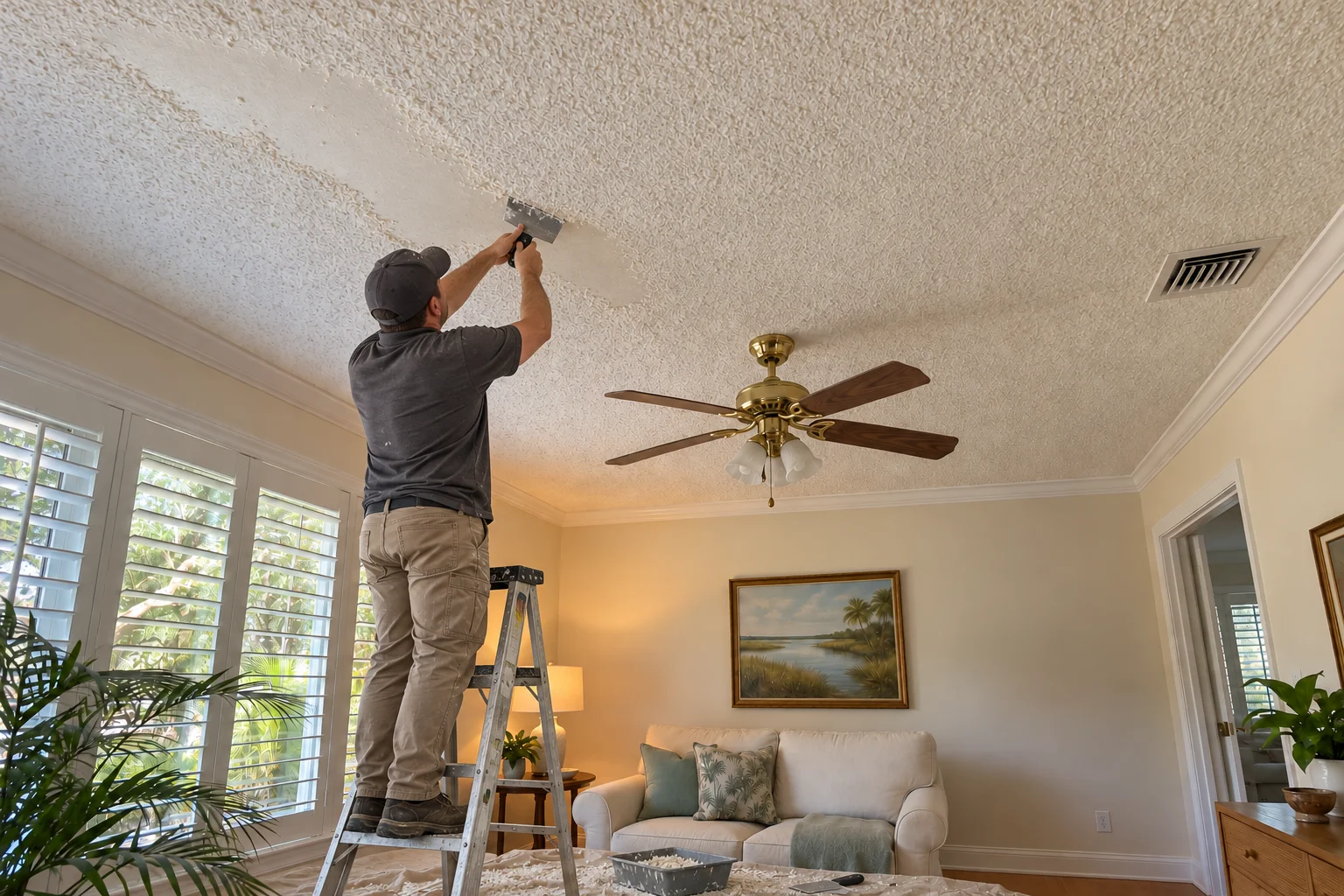
Start with the history you know
Tell us whether the den has been renovated, whether the ceiling has been painted, and whether any patches or stains have returned. In an older home, the ceiling substrate may differ from the walls or from later additions. We assess the material beneath the finish as part of the repair discussion. Photos of existing damage can help, but do not open the ceiling for the request. Unknown conditions are a reason for a closer look, not an invitation to assume a standard surface.
Older ceiling material needs evaluation
Before popcorn is scraped or sanded, older ceiling material should be checked for asbestos. Yellowing, paint layers, and the texture's pattern cannot determine what it contains. Arrange appropriate testing and any necessary specialist work before disturbing the surface. If results already exist, include them in the planning information. We can discuss your desired finish and practical room setup, but those discussions do not replace material evaluation or establish that a ceiling is suitable for ordinary removal.
Before & after
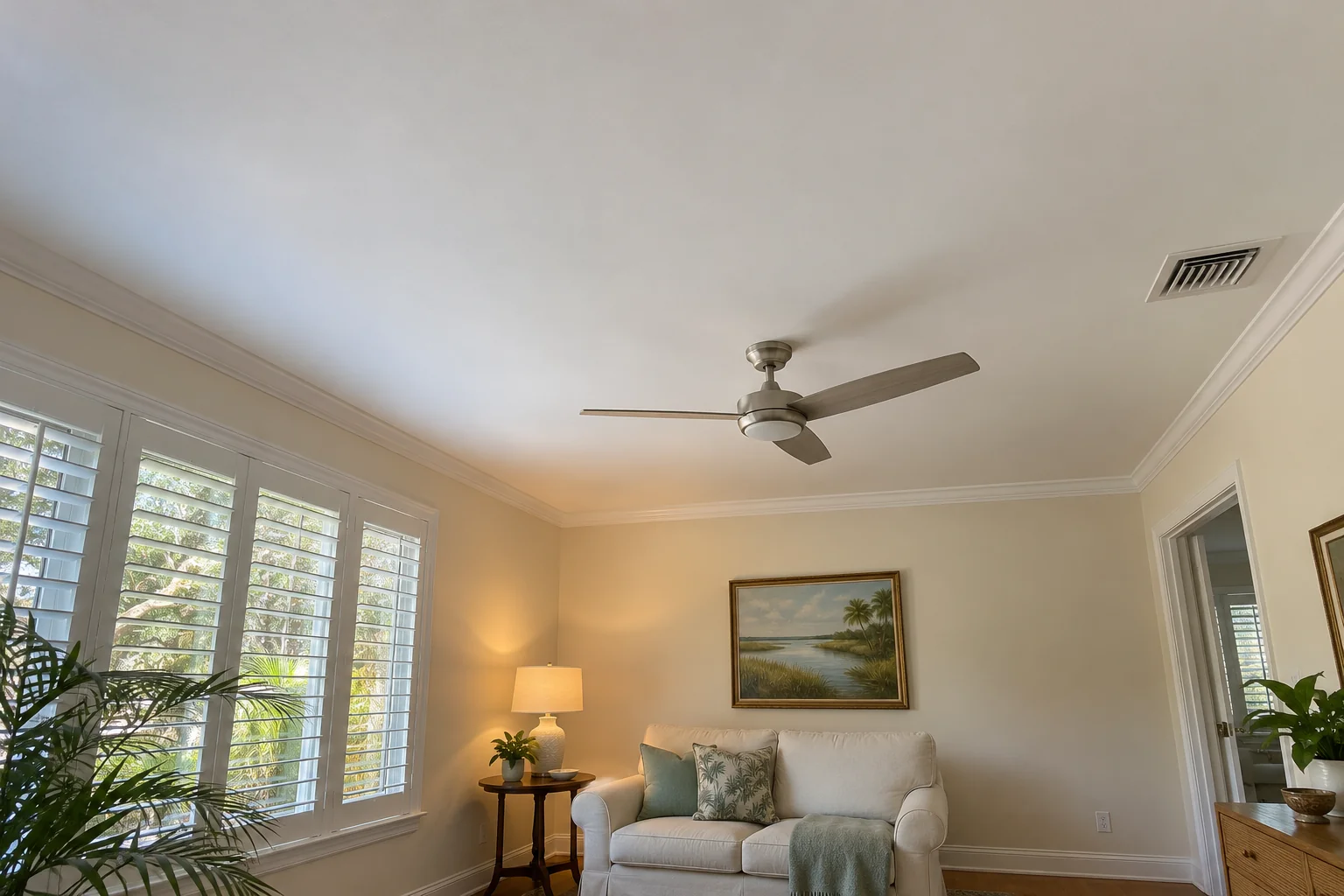
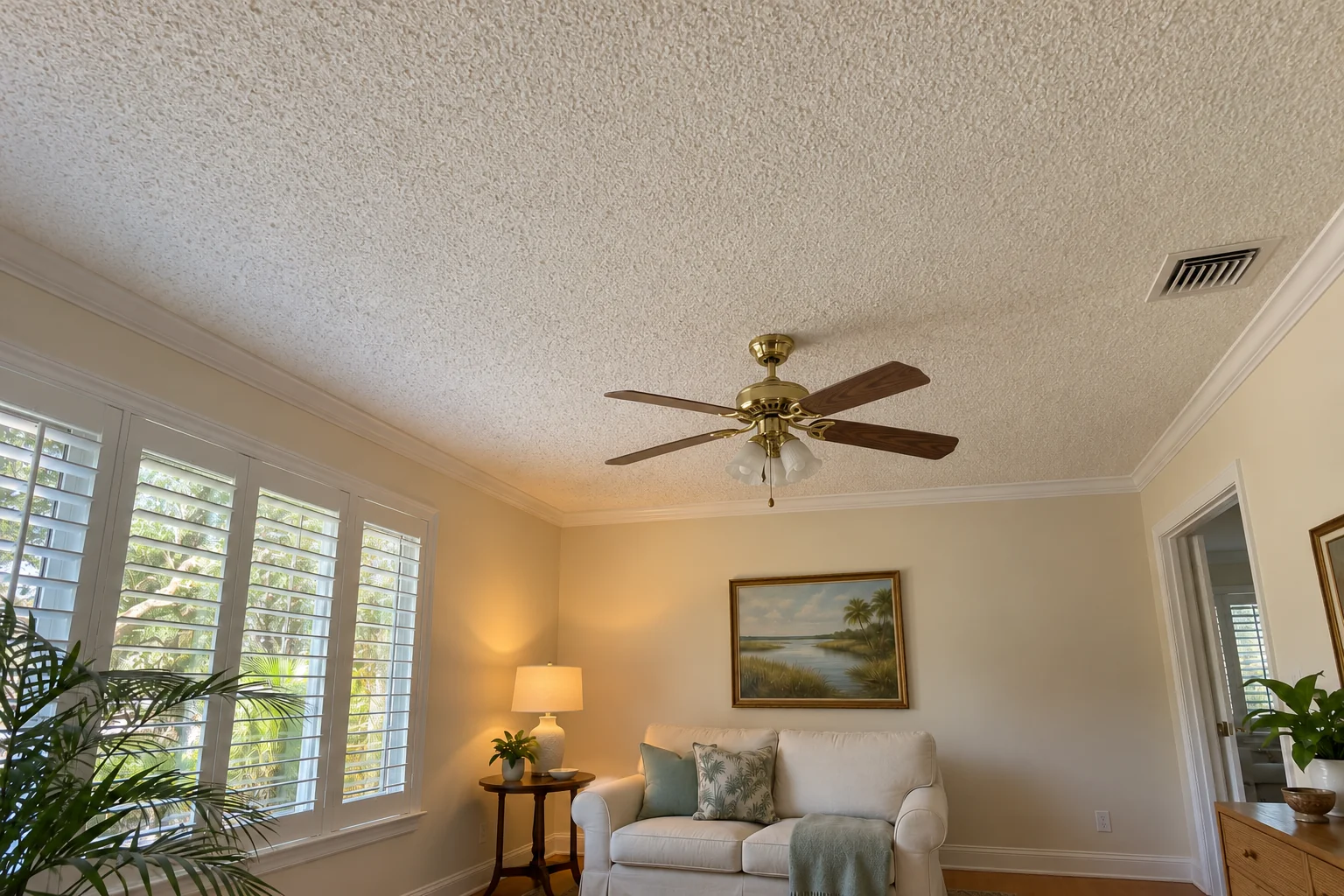 BeforeAfter
Preserve the room details
A den may have crown molding, wood floors, shutters, or an older fan that the homeowner wants to keep. Include those features in your room photos. We discuss protection and the edges where the new finish will meet existing trim. Removing popcorn does not automatically include changing the fan or lighting. If another trade is making changes, identify the necessary openings before the final ceiling finish so the original details and the planned updates can be coordinated.
What happens after the texture comes off
The ceiling may need seam work, patching, or broader surface preparation once the heavy texture is removed. We discuss those possibilities and the finish you want afterward. A smooth surface has different preparation demands from a light texture. The scope should also make clear whether priming and painting are included and how the ceiling meets the walls. A small room can still require careful finishing, particularly when side light from a tall window highlights the surface.
Make room for the work
A compact den can be difficult to access when it contains a large sofa, bookcases, and a desk. Send photos before you move everything so we can talk through what needs to be cleared and what can be protected. Tell us which pieces are difficult to relocate. If the den is used as a home office, discuss that practical constraint when planning the project. We also ask whether adjacent rooms need to stay accessible during setup, ceiling work, and cleanup.
Send a ceiling view and a room view
Text us a photo, get a quote. Include your Stuart location, the texture, and the furnishings below it. Share the home's approximate age if known, any material evaluation, and the finish you prefer. Our crew replies with next steps and identifies details that need an on-site assessment. The main popcorn removal page explains the broader process. We also serve Palm City, Jensen Beach, and Hobe Sound, with other local services available through the Stuart hub.
Questions from Stuart homeowners
Should my older Stuart home be tested before popcorn removal?
Homes built before the early 1980s should have the texture tested for asbestos first. We talk through that step before any work is scheduled.
Can you smooth the ceiling after the popcorn comes off?
Yes. The ceiling underneath usually needs a skim coat to hide seams and old repairs before primer and paint.
Can you remove popcorn in just one room?
Yes. One room is fine, and some homeowners start with the main living area and do the rest later.