
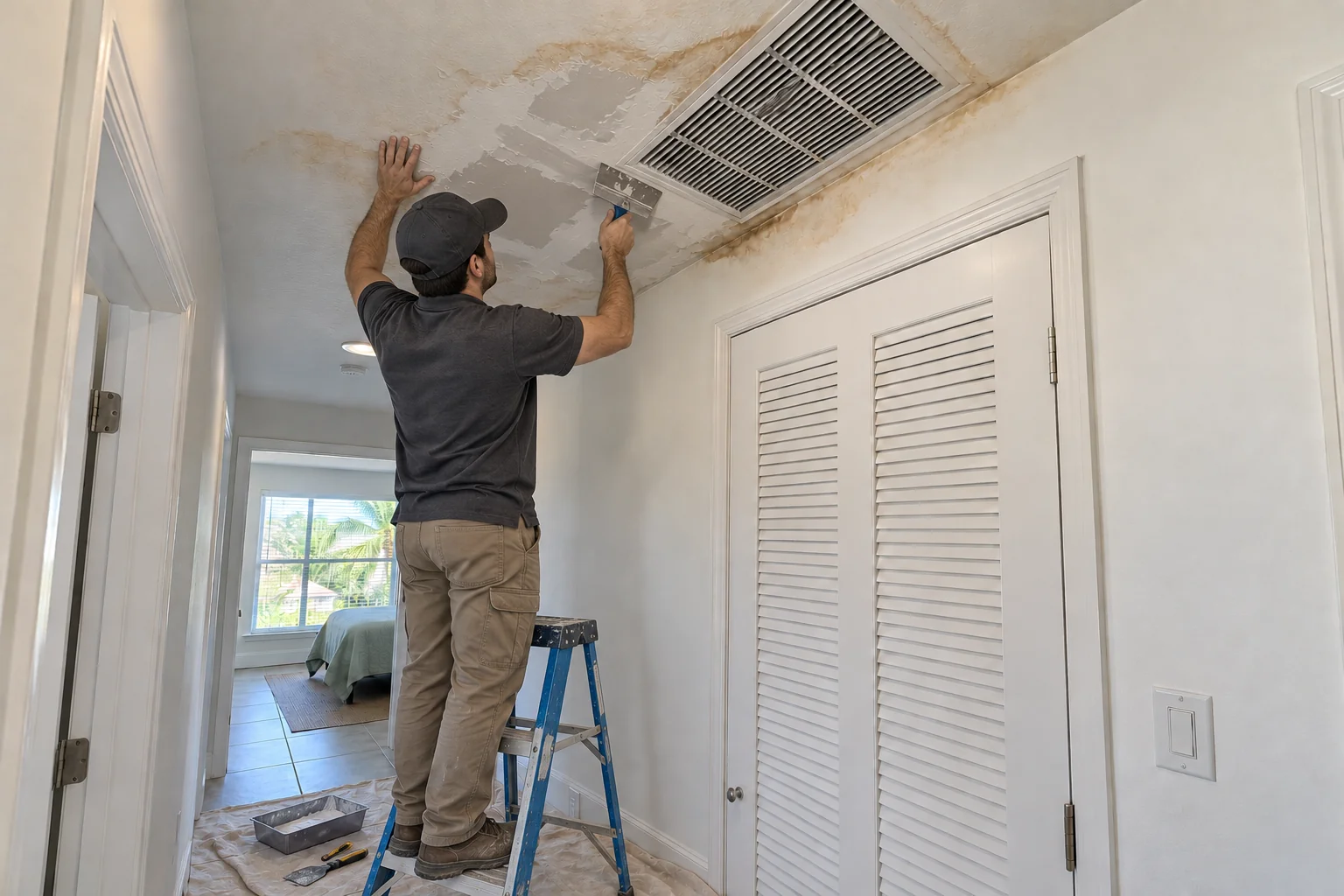
Have the AC source checked before ceiling work
An overflowing pan or blocked drain can wet the hall ceiling, but the stain alone does not confirm the cause. Have the appropriate HVAC professional investigate and address the equipment or drainage issue. Tell us what was repaired and whether further access is still needed.
We schedule the drywall stage around that work. A temporary change in the stain's appearance is not proof that the problem is resolved. If the ceiling is sagging or loose, avoid the area below it and arrange a prompt assessment rather than touching or loading the damaged surface.
Use the closet and hallway layout to plan access
A narrow hallway can make ceiling work more involved than a similar patch in an open room. Closet doors, an AC return and nearby light fixtures may limit the working position. Wide photos show how the damaged section relates to those details.
We discuss keeping a route through the house and protecting floors beneath the repair. If the property is vacant between tenants, tell us when other trades are scheduled. Drywall work should follow source repair and verified drying, with sufficient time for finishing before painting or a planned move-in.
Before & after
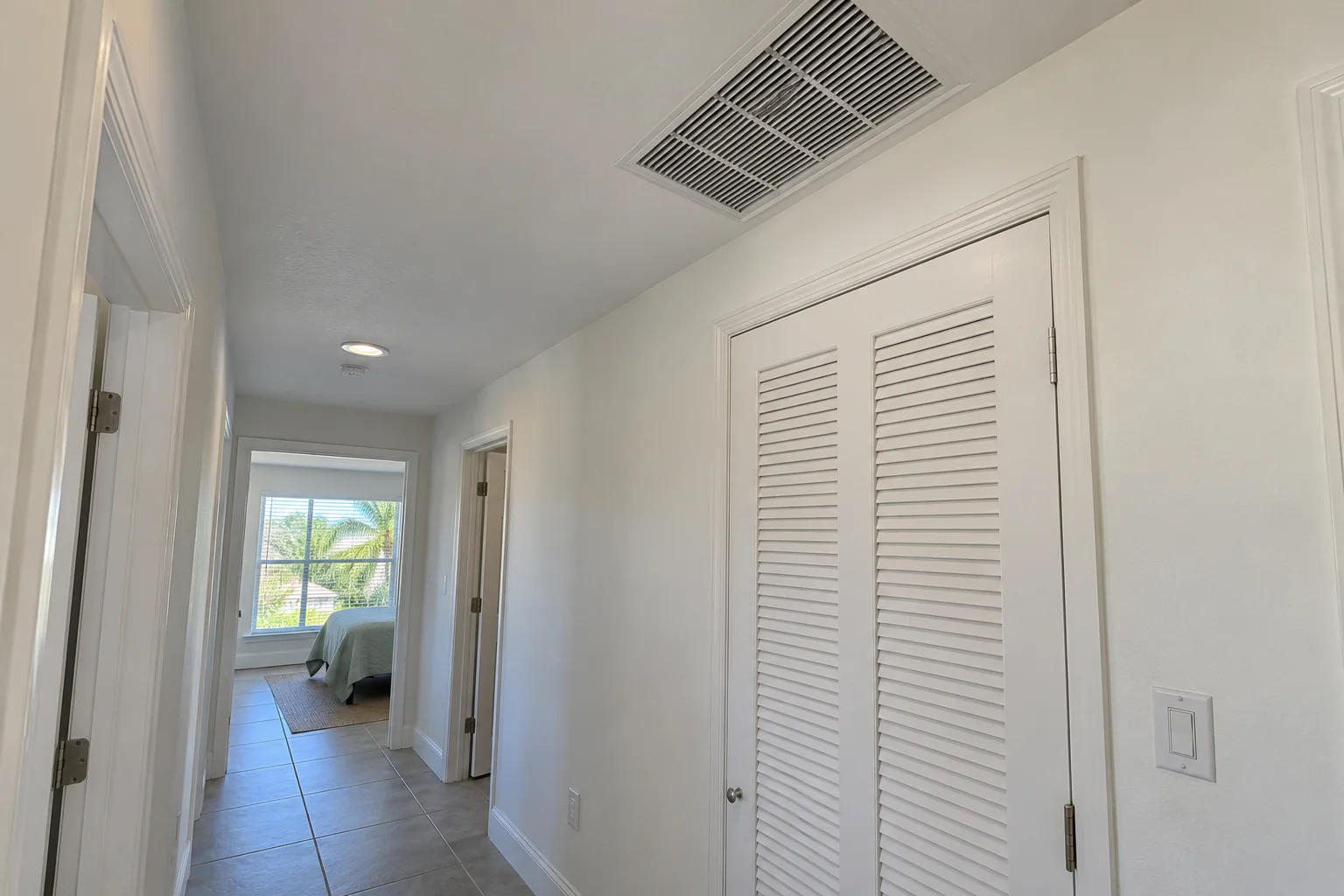
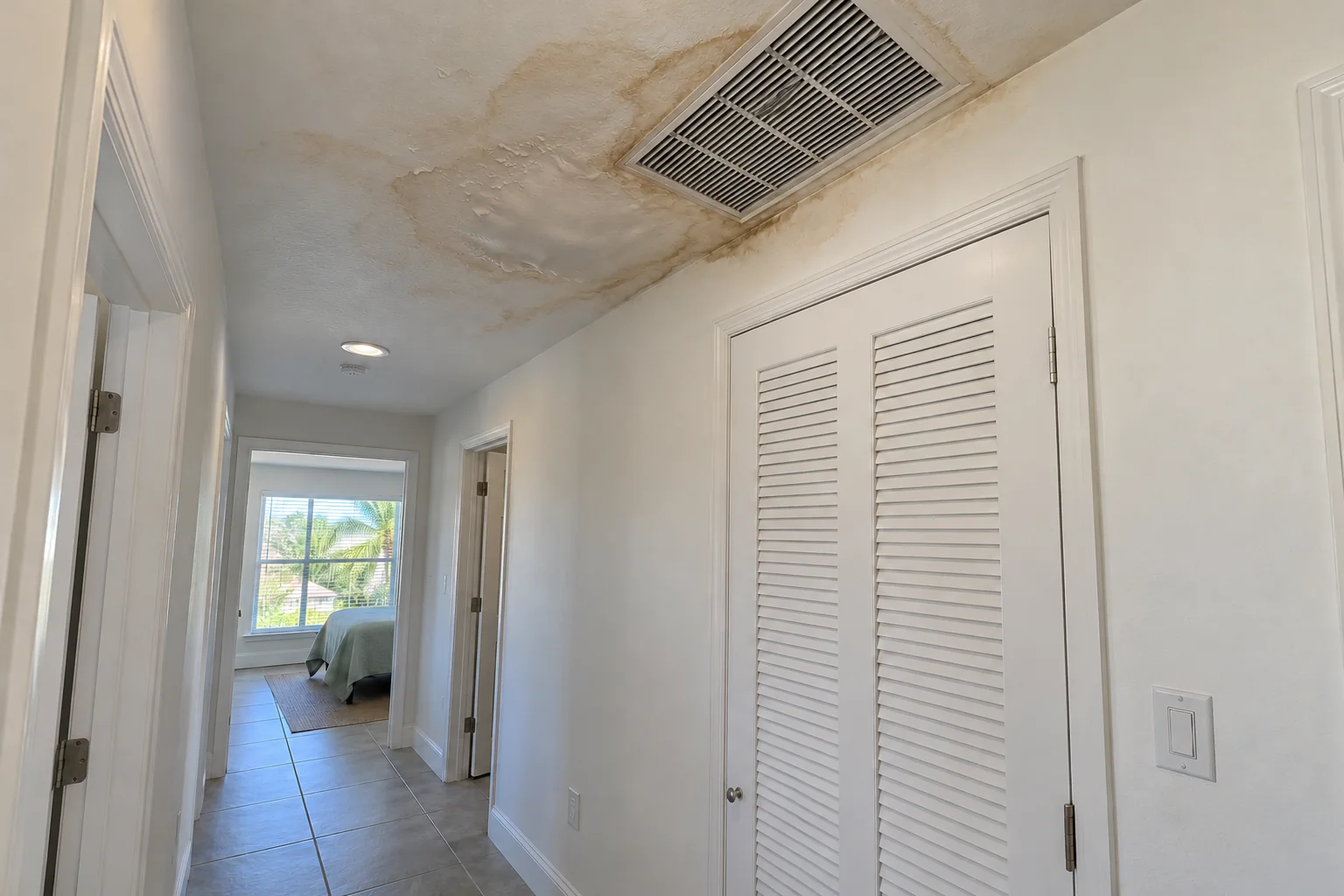 BeforeAfter
Replace weakened drywall with a supported patch
Soft gypsum, crumbled edges and detached tape may require removal even beyond the main brown ring. We assess the condition of the surrounding ceiling and choose a boundary that permits secure installation. The new section needs proper support rather than relying on compound to hold a loose edge.
Before closing the opening, the source must be resolved and drying verified. Any remaining work inside the ceiling comes first. If the affected area is larger than the photos suggested, we explain the revised scope before treating a larger section as part of the original patch.
Blend the knockdown texture
Many homes in Port St. Lucie's 1980s to 2000s neighborhoods have knockdown ceilings. The size, spacing and flattened profile of that texture vary from room to room. We look at the existing pattern and prepare the patch before adding texture, so a smooth square does not remain in the middle of the surrounding finish.
The blend may extend beyond the drywall cutout. Age, previous painting and lighting also influence how it reads. We explain the expected work area without promising that every old texture can be duplicated exactly.
Clarify paint and rental-turnover details
Stain treatment and primer need to be considered along with final ceiling paint. Painting only the patch can leave a different sheen, particularly under hallway lighting. We discuss a natural stopping point and identify the painting responsibilities in the quote.
For a rental or investment property, share access arrangements and the contact who can make scope decisions. If a claim is underway, keep source-repair records and photos. An itemized drywall description can support your records, but we do not decide insurance coverage or promise reimbursement.
Text the damage and the AC closet
Text us a photo, get a quote. Send the affected ceiling, the nearby air handler closet and a wider hallway view. Include your Port St. Lucie location, occupancy status and confirmation of source repair and drying if available. We reply with next steps and explain when a site visit is needed.
Questions from Port St. Lucie homeowners
My hall ceiling is stained near the air handler. What causes that?
An overflowing or clogged AC drain pan is a common cause in Port St. Lucie homes. Have the AC serviced first, then we repair the ceiling.
Does wet drywall always have to be replaced?
Not always. A dry, firm stain may only need sealing and paint. Drywall that is soft or sagging should be cut out and replaced.
Can you repair storm damage in Port St. Lucie?
Yes. Once the roof or window leak is fixed, we replace the damaged drywall and finish it to match.