
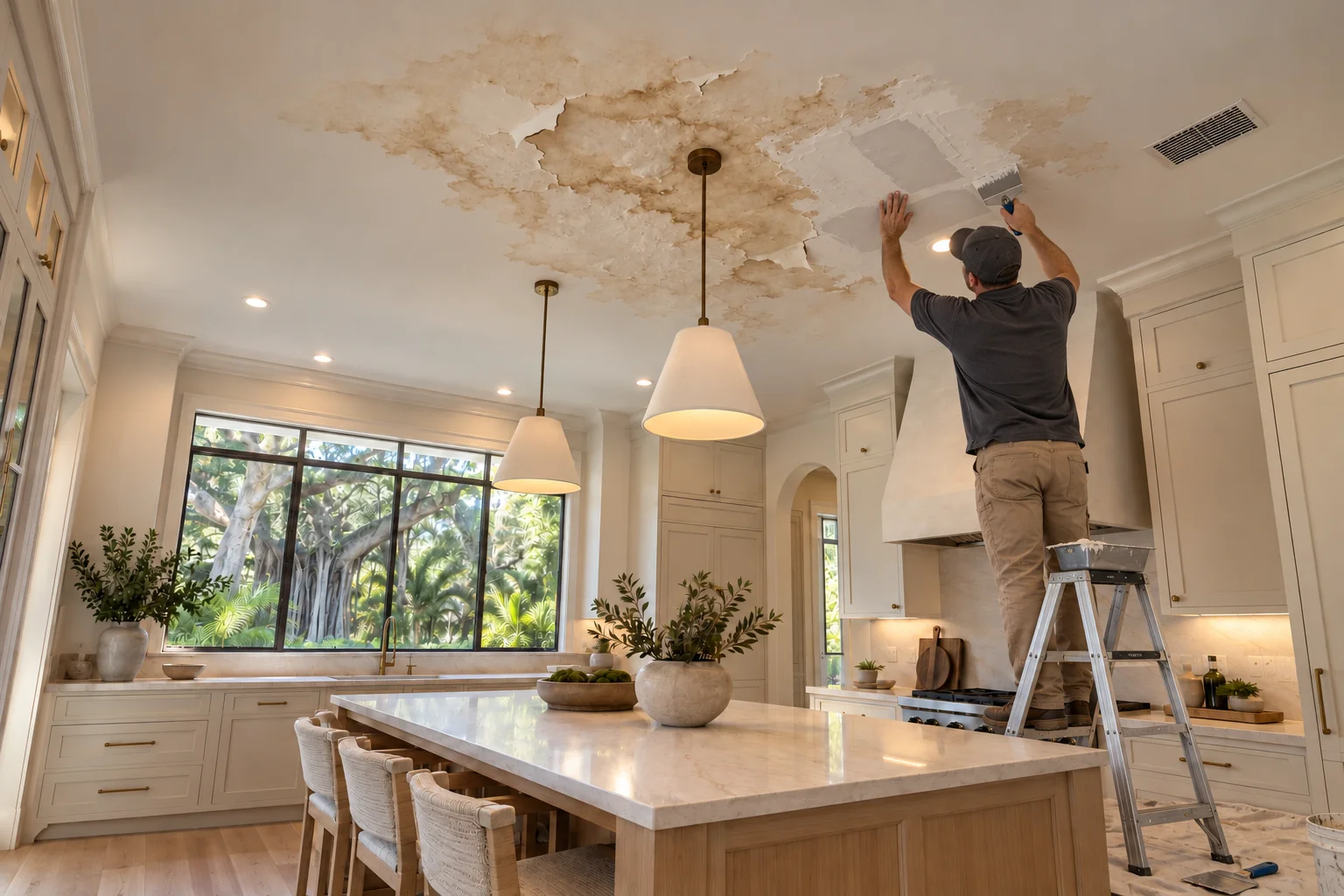
Resolve the upstairs problem first
A stain below a bathroom does not identify whether the trouble is a supply fitting, drain, fixture seal or another source. The appropriate trade needs to investigate and repair the cause. Let us know what was found and whether access through the ceiling is still needed for their work.
We plan the drywall stage around that information. Closing a ceiling before the source has been checked can mean opening it again. If the leak is still active, protect the area and arrange source repair before requesting cosmetic finishing.
Plan around a working kitchen
Kitchen repairs involve cabinets, counters, appliances and daily household use. We discuss which parts of the room need to be cleared and what protection is appropriate for the surfaces below. A ceiling opening over an island may require a different access plan from one above a perimeter counter.
In homes with white oak floors or closely fitted cabinetry, the work route matters too. Send a wide view so we can see the ceiling height and nearby finishes. Tell us about lighting fixtures or built-in details directly beneath the damaged area.
Before & after

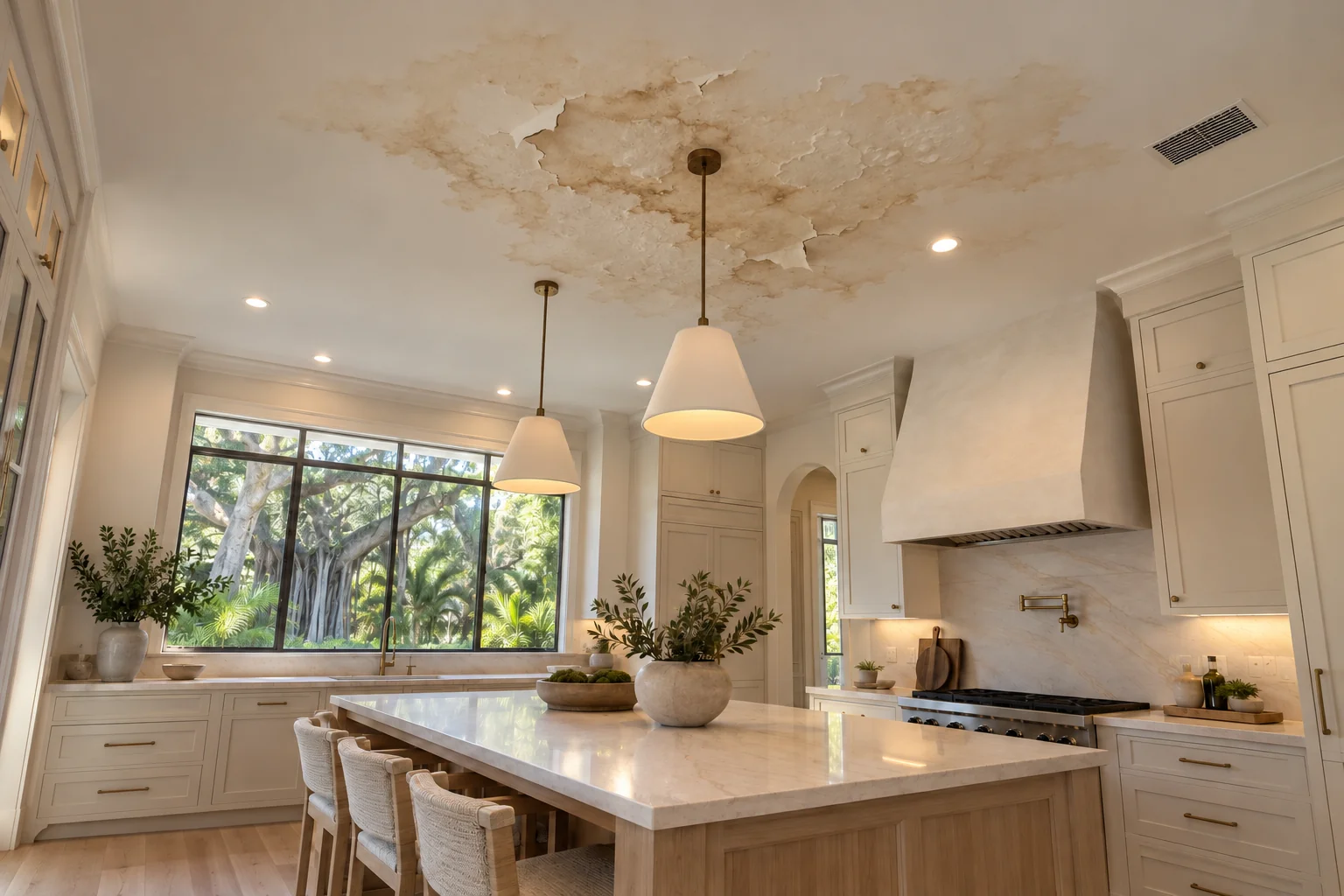 BeforeAfter
Assess the material and confirm drying
Peeling paint can be a surface symptom, while a bulging section or soft gypsum may require removal and replacement. We inspect the condition rather than assuming every stain needs the same treatment. Where material is removed, the repair boundary must reach sound edges and allow secure support.
Any necessary source work and drying verification must be complete before we close the opening. If another issue becomes visible, we pause that part of the repair and discuss the appropriate next step. New drywall should follow a resolved problem, not hide one.
Blend into a smooth ceiling
A smooth ceiling gives compound ridges and shallow depressions fewer places to hide. We finish replacement joints in stages and assess the transition into the surrounding surface. The blend may need to extend well beyond the cutout, especially where light crosses the ceiling from a large window.
Shaded rooms can still show a patch when lights are on in the evening. We discuss the intended finish and the areas visible from adjoining rooms. A local patch and a broader skim coat are different scopes, and the quote should make that distinction clear.
Finish the edges, paint and project records
Ceiling paint, stain treatment and work around crown molding need to be defined before the repair is considered complete. Existing paint may have aged differently across the room. We explain when painting a larger section to a natural boundary may give a more consistent appearance.
If the work is part of a claim, keep source-repair records and photos of the affected area. Ask us about an itemized description of the drywall portion. We do not determine insurance coverage or promise payment, and any additional trade work should remain clearly identified.
Start with photos from two distances
Text us a photo, get a quote. Send the ceiling damage close up and the full kitchen from farther back. Include your Hobe Sound location, the status of the upstairs repair and any drying information. We reply with the next steps and explain whether access or finish details require a visit before quoting.
Questions from Hobe Sound homeowners
A bathroom leak stained my kitchen ceiling. What happens next?
Have the plumbing repaired first. We then check the ceiling, replace any soft drywall and seal the stain before finishing.
Can you keep dust out of the rest of the house?
Yes. We seal off the work area and protect floors and finishes around it.
Do you replace insulation behind wet drywall?
We check the insulation when the ceiling is open and let you know if wet insulation should be replaced before we close it up.